
Ethics & societyDemonstration article
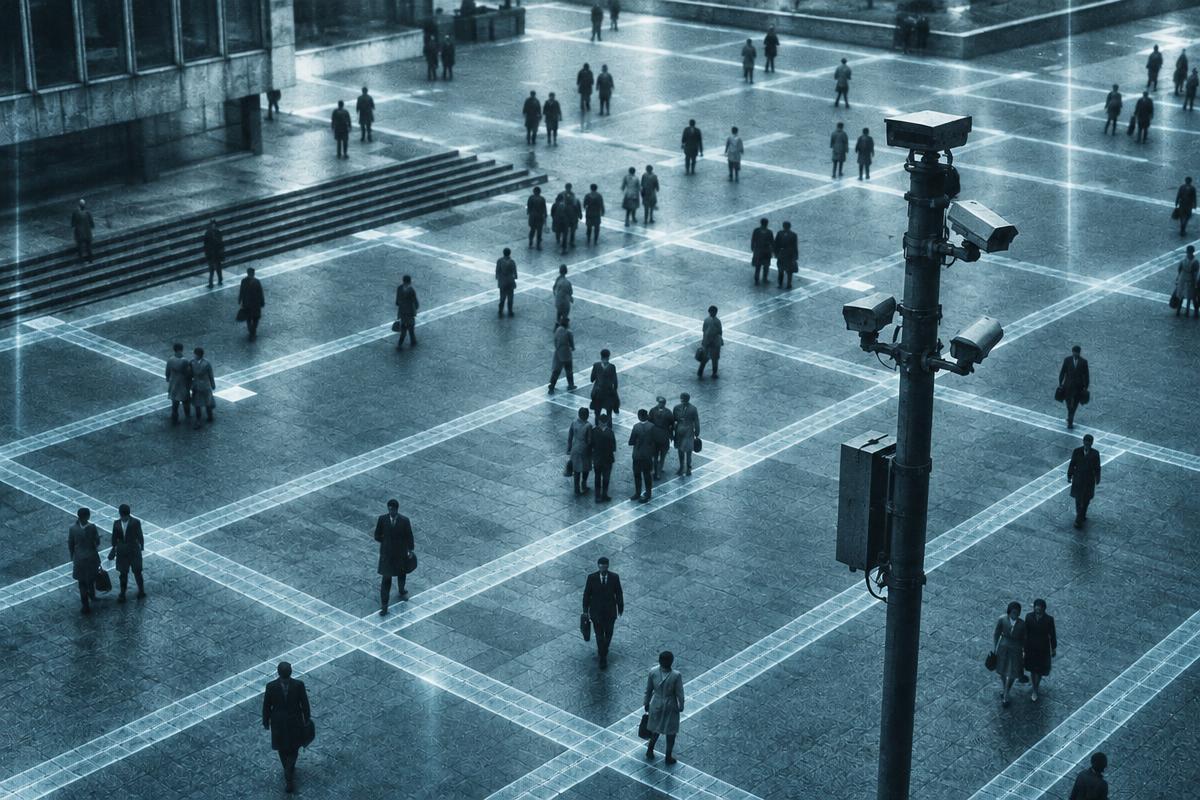
The square under the camera
Public space depends on being able to move without being watched. What happens when pattern recognition becomes infrastructure?
By Editors (demo) · · 1 min read
Core claim & position
- Core claim
- Automated recognition changes the promise of public space, even if it never intervenes.
- Position
- Decisions about its use should be public, time-limited and accompanied by an effective means of challenge.
A square is more than an area of ground. It is a promise: here you may linger, demonstrate and meet others without having to account for yourself.
01The quiet effect
Simply knowing that we are being watched can change behaviour. People avoid places, gestures, encounters. This effect is difficult to measure because it consists of things not happening.[1]
02Questions for society
- Who decides on its use – and who oversees that decision?
- How long is data stored, and who has access?
- Is there an effective means of challenge for those affected?